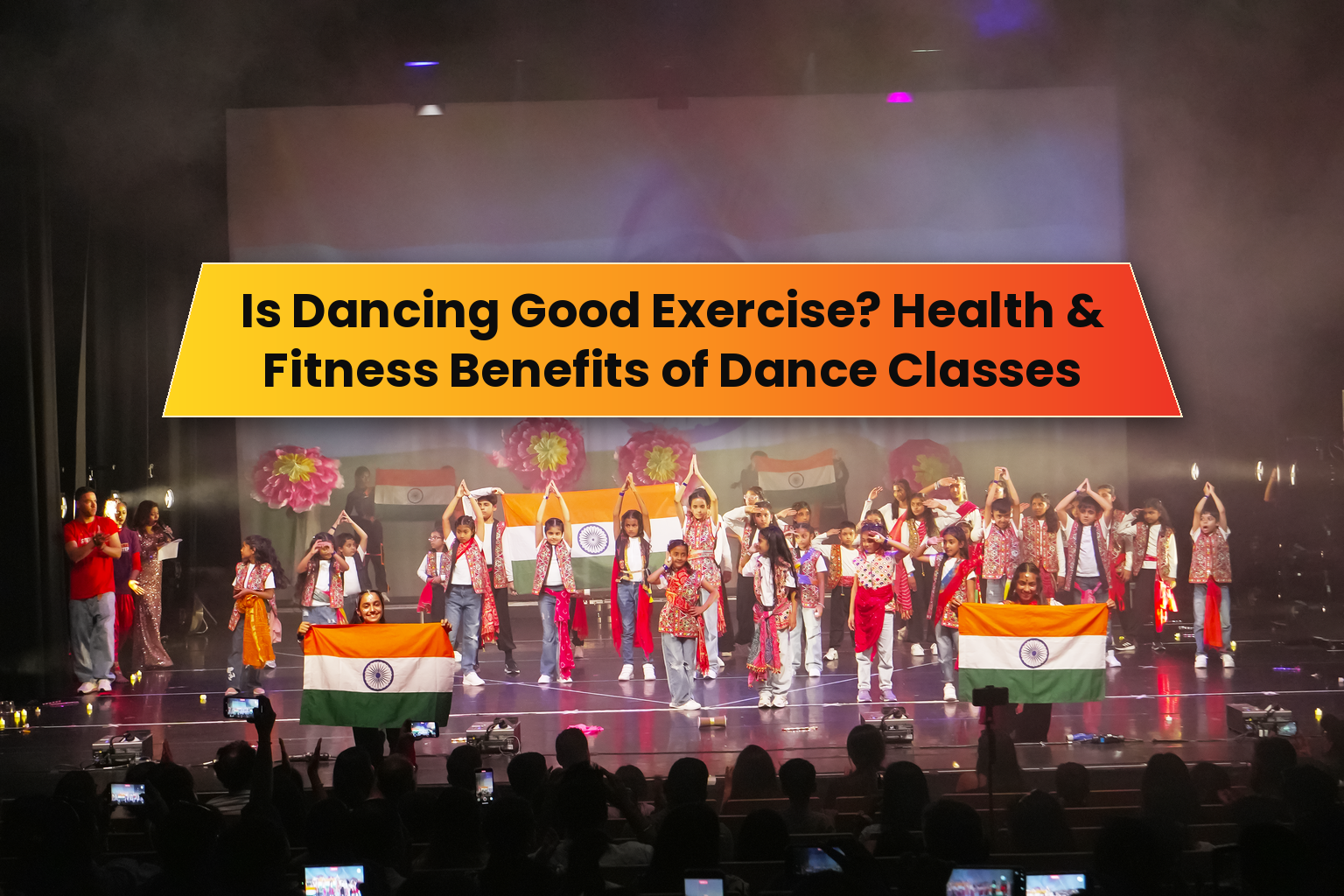
Yes, dancing is excellent exercise. A dance class works your heart, lungs and muscles all at once. It also improves flexibility, balance and coordination. An hour of energetic dance, such as Bollywood or Bhangra, can burn roughly 300 to 600 calories, depending on your body weight and how hard you work.
Dance is also great for your mind. It lifts your mood, reduces stress and builds confidence. And because it feels like fun rather than a workout, people tend to stick with it far longer than they stick with the gym.
At Sumeet’s Step2Step, we see it every week. Students come for the music and the routines, and stay for how good dancing makes them feel.
The NHS recommends that adults do at least 150 minutes of moderate activity a week, plus strength exercises on two or more days (NHS guidelines for adults). Children and young people should aim for an average of 60 minutes of activity a day (NHS guidelines for children).
Dance helps you meet both targets. Two one-hour dance classes a week cover most of an adult’s weekly goal. For children, dance classes are a fun way to stay active away from screens.
Dance is a form of cardio. Fast-paced styles like Bollywood, Bhangra and hip-hop raise your heart rate and keep it up for a whole song or routine. Over time, this improves heart health, stamina and lung capacity. Many students notice they get less out of breath within just a few weeks.
Because dance burns calories and builds muscle, it supports a healthy weight when combined with good eating habits. The best part is that you’re focused on the steps and the music, so an hour can fly by without feeling like hard exercise.
Jumps, squats, lunges and holding positions all build strength, especially in your legs, glutes and core. Arm-heavy styles like Bhangra and Bollywood also tone the shoulders and arms.
Most dance classes start with a warm-up and stretches, and many moves need a good range of motion. Regular classes gradually loosen tight muscles and joints, which helps with posture and everyday movement.
Dance trains your body to move different parts at once, in time with the music. This builds coordination, balance and body awareness. These skills help children in sport and play, and help adults stay steady on their feet as they get older.
Dance is a weight-bearing activity, meaning your bones support your body weight as you move. Weight-bearing exercise helps keep bones strong, which matters for growing children and for adults later in life.
Exercise releases endorphins, the body’s natural feel-good chemicals. Add upbeat music and a friendly group, and dance becomes one of the best stress-busters there is. Many of our adult students tell us their weekly class is the highlight of their week.
Learning choreography means remembering steps, counts and sequences. This keeps your brain active and improves concentration. Research suggests regular dancing may support brain health as we age, making it a brilliant activity at any stage of life.
Every new routine you master builds self-belief. Performing in front of others, whether in class or on stage at a showcase, helps shy children and nervous adults find their confidence. It’s one of the most common changes parents notice in their children.
Dance classes bring people together. Working as a team on a routine, cheering each other on and performing together creates real friendships. That social connection is great for mental wellbeing too.
Every style is good exercise, but some are more intense than others.
Bhangra is one of the most energetic styles. It’s packed with jumps, bounces and big arm movements, making it a full-body cardio workout.
Bollywood mixes fast footwork, expressive arm movements and high-energy choreography. It’s a fun all-round workout for fitness, flexibility and coordination.
Hip-hop and street dance build leg strength, stamina and core control through grooves, footwork and sharp movements.
Jazz and commercial dance focus on kicks, turns and flexibility, building strength and control.
Ballet develops core strength, posture and flexibility, though it’s usually less cardio-focused than faster styles.
If your main goal is fitness, high-energy styles like Bollywood and Bhangra are a brilliant place to start.
Dance is one of the best activities a child can do. Alongside fitness, it teaches discipline, listening skills, teamwork and confidence. Children who dance regularly often find it easier to focus at school and to make friends. If you’re wondering when to start, read our guide on the best age for a child to start dance.
For adults, dance is a fun alternative to the gym. It’s a chance to switch off from work, meet new people and get fit without it feeling like a chore. It’s never too late to start. Find out what to expect in our guide: How Long Does It Take to Learn to Dance?
If you have a health condition, an injury or haven’t exercised in a while, speak to your GP before starting any new exercise.
Both are good for you, but many people find dance more enjoyable, so they stick with it longer. Dance combines cardio, strength, flexibility and coordination in one fun session.
Roughly 300 to 600 calories, depending on your weight, the dance style and how energetically you dance. High-energy styles like Bhangra and Bollywood burn more.
Yes. Regular dance classes burn calories and build muscle, which supports weight loss alongside a balanced diet.
Two or three sessions a week is ideal for noticeable fitness improvements. Even one class a week makes a positive difference.
Yes. Dance builds strength, coordination, fitness and confidence, and helps children meet the recommended 60 minutes of daily activity in a fun way.
Dancing is one of the few forms of exercise that works your body, lifts your mind and brings people together, all at the same time. Whether you want to get fitter, feel happier or simply try something new, a dance class is a brilliant place to start.
At Sumeet’s Step2Step, we offer Bollywood and dance classes for children and adults of all levels. Every routine is broken down step by step, so you’ll be dancing, sweating and smiling from your very first class.
Ready to get moving? Book your class with Sumeet’s Step2Step today and find more dance tips on our blog.


