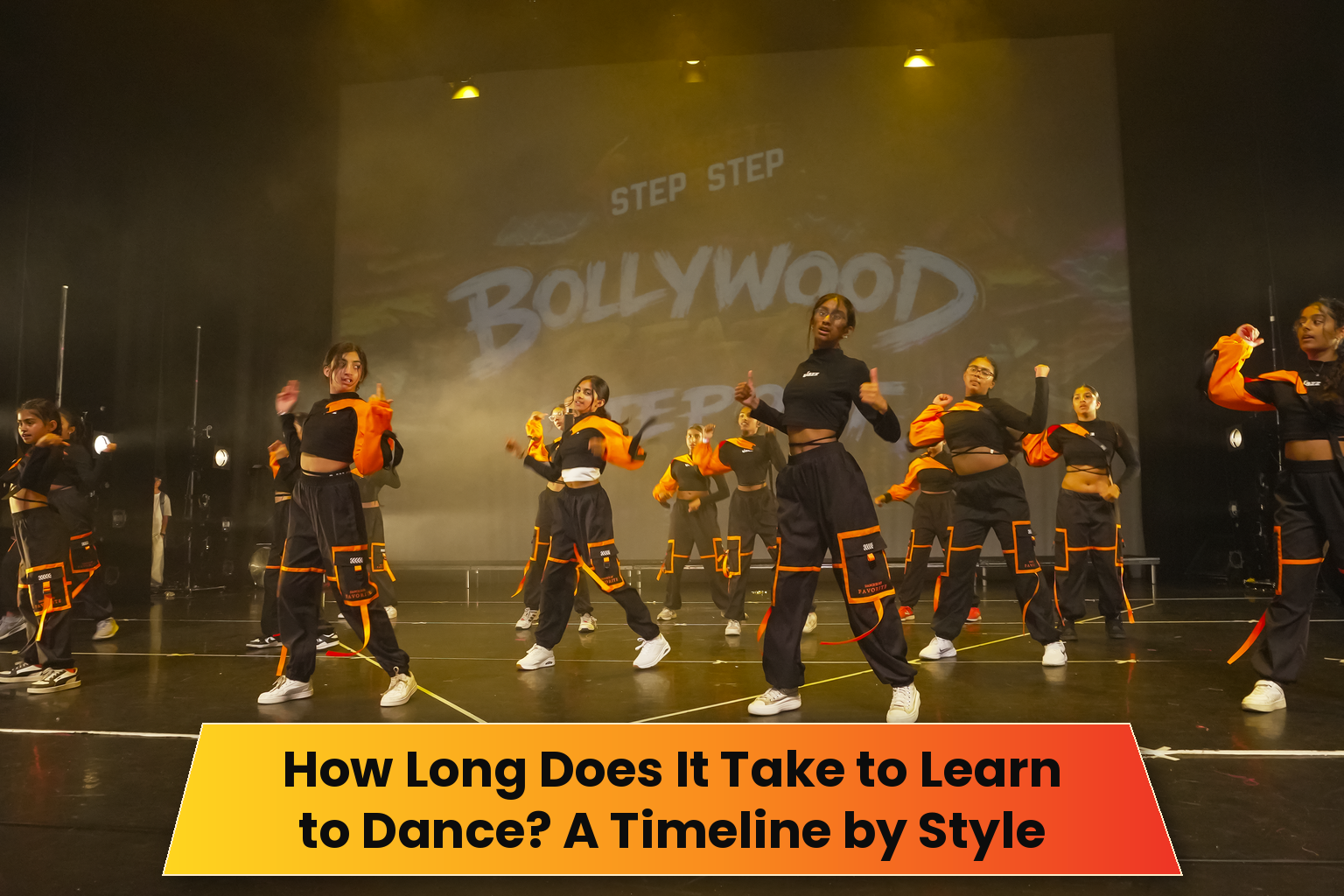
Most beginners can learn basic steps and dance one simple routine within 4 to 8 weeks of weekly classes. Feeling confident and comfortable usually takes 3 to 6 months. Reaching an intermediate level, where you can pick up new choreography quickly, takes around 1 to 2 years. Becoming an advanced dancer takes 3 to 5 years or more of regular training.
The exact time depends on the dance style, how often you practise, and whether you’re learning as a child or an adult. At Sumeet’s Step2Step, we see new students go from nervous first-timers to performing on stage at our annual Stepout showcase within their first year.
Every dancer goes through the same four stages, whatever style they choose.
Stage 1: Beginner (0 to 3 months). You learn basic steps, rhythm and how to follow a teacher. Routines feel hard to remember at first, and that’s completely normal.
Stage 2: Confident beginner (3 to 12 months). Steps start to feel natural. You can remember a full routine, keep in time with the music and enjoy dancing instead of thinking about every move.
Stage 3: Intermediate (1 to 3 years). You pick up new choreography quickly, add your own style and expression, and feel comfortable performing in front of an audience.
Stage 4: Advanced (3 years and beyond). You have strong technique, stamina and stage presence. Many advanced dancers start to teach, compete or create their own choreography.
Timeline: 4 to 6 weeks for your first routine, 6 to 12 months to feel confident.
Bollywood is one of the most beginner-friendly styles. It mixes Indian classical, folk and modern moves with expressive hand gestures and lots of energy. Because each class usually builds towards a fun routine to a popular song, students feel progress very quickly. Mastering the finer details, such as facial expressions, footwork and fast transitions, takes longer and usually develops over two to three years.
Timeline: 4 to 8 weeks for basic moves, 6 to 12 months for stamina and style.
Bhangra’s basic steps are simple, but the style is very energetic. The real challenge is building the fitness to keep the bounce and big arm movements going for a whole song. Most students notice a big jump in stamina within three months.
Hip-hop basics like grooves, bounces and simple footwork come quickly. The harder part is learning to dance with attitude, control and personal style. Freestyle and battle-level skills usually take several years.
Commercial and jazz dance, the style you see in music videos, need sharp movements, turns and flexibility. Beginners enjoy routines early on, but clean spins, kicks and leaps take steady practice.
Ballet is one of the slowest styles to master because it relies on precise technique, strength and flexibility. It’s a brilliant foundation for every other style, but it needs patience.
Contemporary combines technique with emotion and floor work. Dancers with some ballet or jazz background often progress faster.
A wedding first dance is a special case. You’re learning one routine for one moment, not a whole style. A simple sway takes one or two lessons, while a full Bollywood or mash-up routine takes six to ten. Read our full guide: Wedding First Dance: How Many Lessons Do You Really Need?
How often you dance. One class a week is a great start. Two classes a week can roughly double your progress, because steps stay fresh in your memory.
Practice at home. Just 10 to 15 minutes of practice between classes makes a big difference. Recording your routine on your phone and dancing along to it is one of the best ways to improve.
Your age. Children often pick up moves quickly because they learn by copying and aren’t afraid of looking silly. Adults can learn just as well, and they often understand counts, timing and instructions faster. If you’re a parent, see our guide on the best age for a child to start dance.
Previous experience. Any past dance, sport, gymnastics or martial arts training helps with coordination, balance and fitness.
Performing. Working towards a show gives students a clear goal. Our students often improve fastest in the weeks before a performance, because they practise with focus and purpose.
Your teacher. A good teacher breaks every routine down step by step, corrects mistakes early and keeps classes fun, which means you stick with it long enough to see results.
Yes, absolutely. It’s never too late to learn to dance. Many adults start in their 30s, 40s, 50s and beyond, often for fitness, confidence or to perform at a family wedding or sangeet. Adults may feel more self-conscious at first, but after four to six classes most feel relaxed and start to really enjoy it.
Most beginners learn their first Bollywood routine in 4 to 6 weeks of weekly classes. Feeling confident with the style usually takes 6 to 12 months.
You can learn basic steps and a short, simple routine in a month. Becoming a confident dancer takes longer, usually three to six months of regular classes.
Around 20 to 30 hours of classes and practice is enough to feel comfortable with the basics of most styles. That’s roughly three to six months of weekly classes.
Not necessarily. Adults may be less flexible than children, but they often understand instructions and timing faster. With regular classes, adults make excellent progress.
Bollywood, Bhangra and hip-hop are among the easiest styles to start with. They’re fun, high-energy and give you a full routine to enjoy within a few weeks.
Everyone starts as a beginner. The dancers you see on stage at our showcases once walked into their first class unsure of every step. What made the difference was turning up, practising and having fun along the way.
At Sumeet’s Step2Step, we teach Bollywood and dance classes for children and adults, breaking every routine down step by step so you progress at your own pace. Whether you want to dance for fitness, confidence, a wedding or the stage, we’ll help you get there.
Ready to take your first step? Book your class with Sumeet’s Step2Step today and explore more tips on our dance blog.


